Background

Juriton is a legal AI workspace for working through matter documents and preparing drafts.
As founding product designer and board member, I led the research, product strategy, app design and branding. I also designed and built the marketing website, while engineers built the app.
Problem framing
We spent about five months building a first version with set templates for chronologies, case summaries and other documents. People found the outputs useful, but wanted more freedom to draft things their own way.
Lawyers had their own structures and templates. They also wanted an easier way to bring in documents and a familiar place to write and check sources. We needed to support those ways of working.
Role
Scope
Team
Timeline
Year


Approach
I checked ideas with our barrister co-founder and explained designs to our engineering co-founder through Loom. I then tested the flows and shared fixes through Slack and Linear.
We considered a database of Australian court decisions, but importing and keeping it up to date would cost too much. We focused on working with matter documents.
01
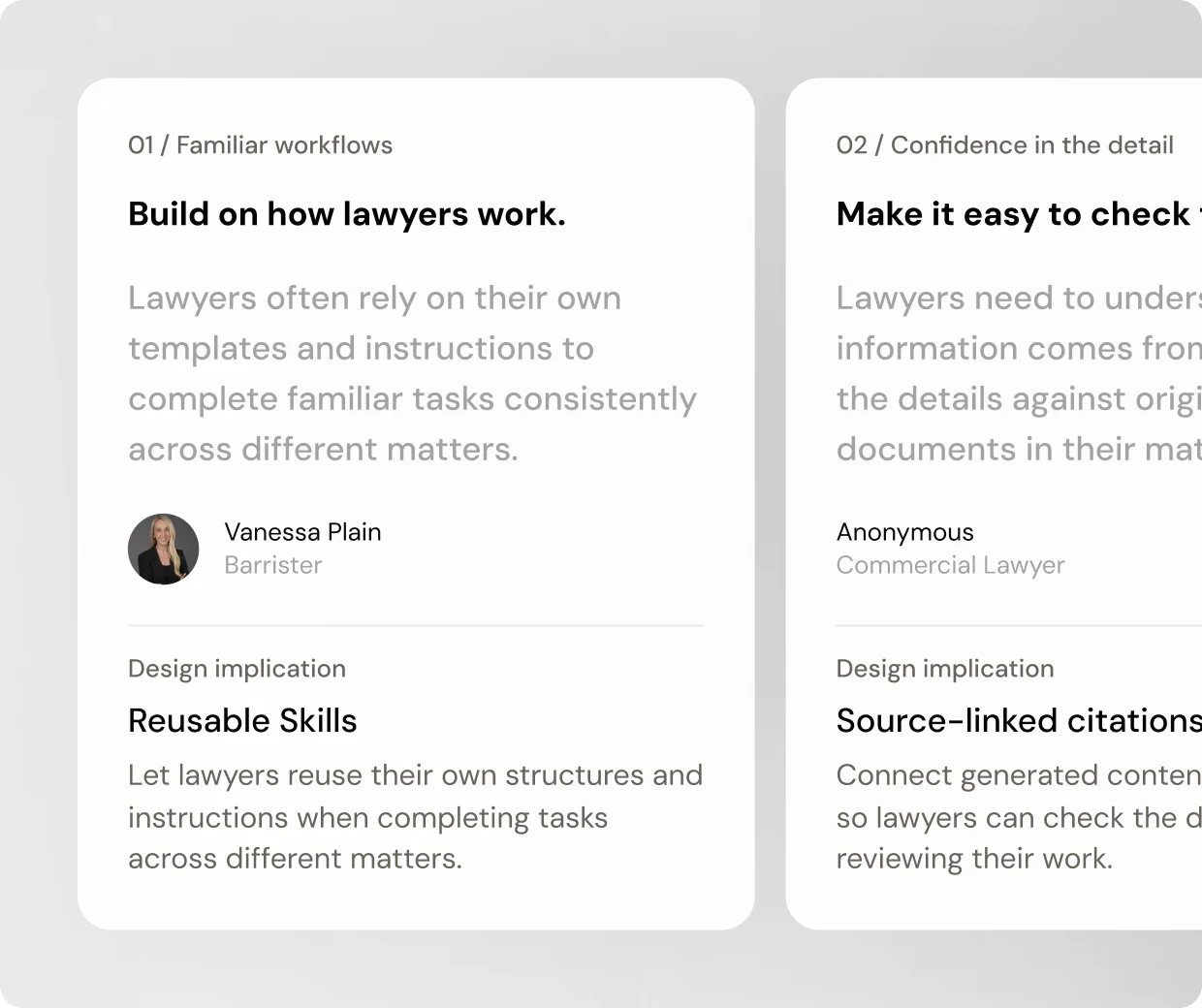
Interview lawyers and barristers
I interviewed 20 lawyers and barristers about how they prepared documents. They each had their own methods. Their feedback led us to create skills, make imports easier and build an editor with citations for checking sources.


02
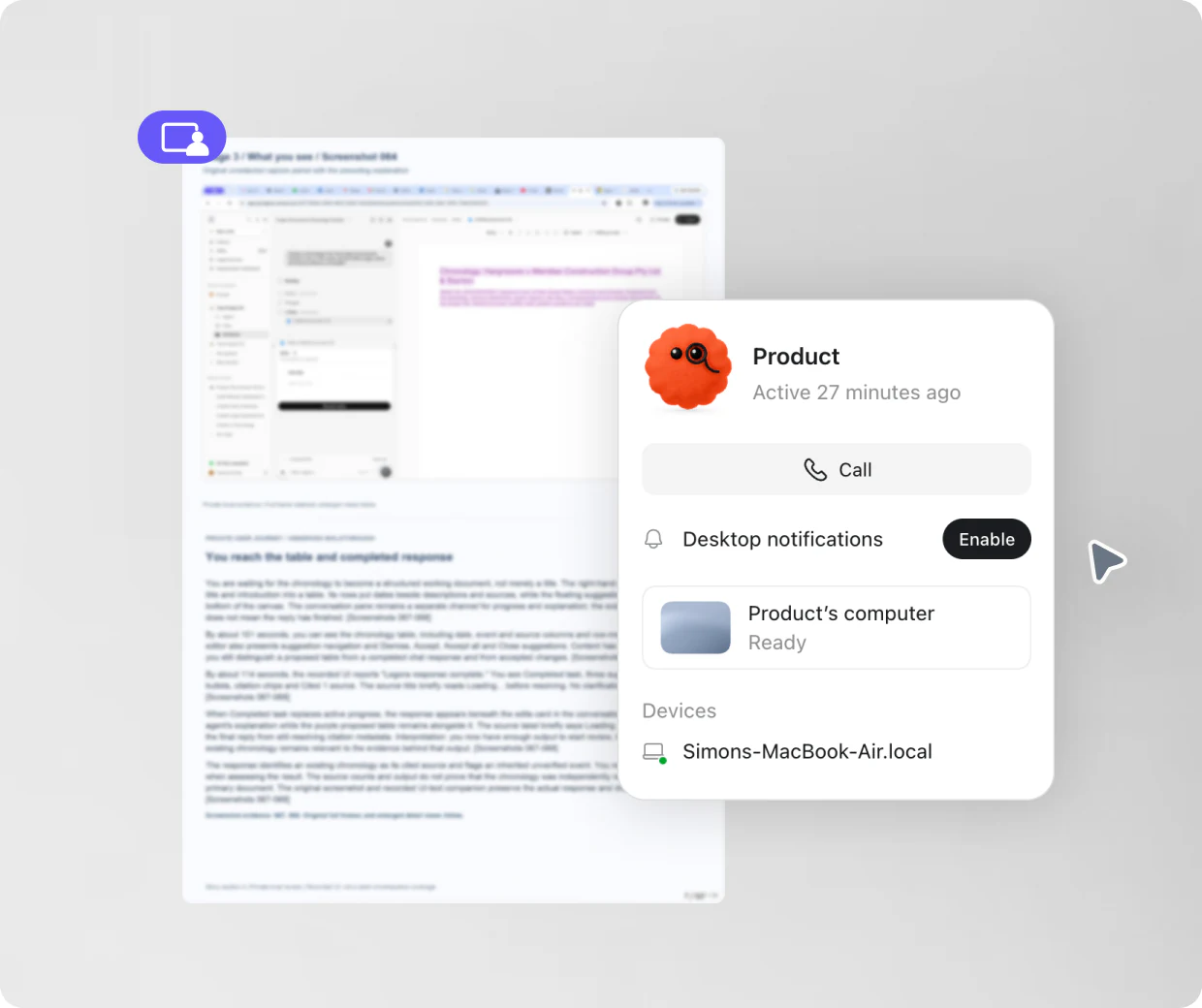
Compare product journeys
I used ChatGPT dot to document competitor journeys and compare the same tasks across products. This made gaps in Juriton’s experience easier to identify and gave me concrete flows to improve.

03
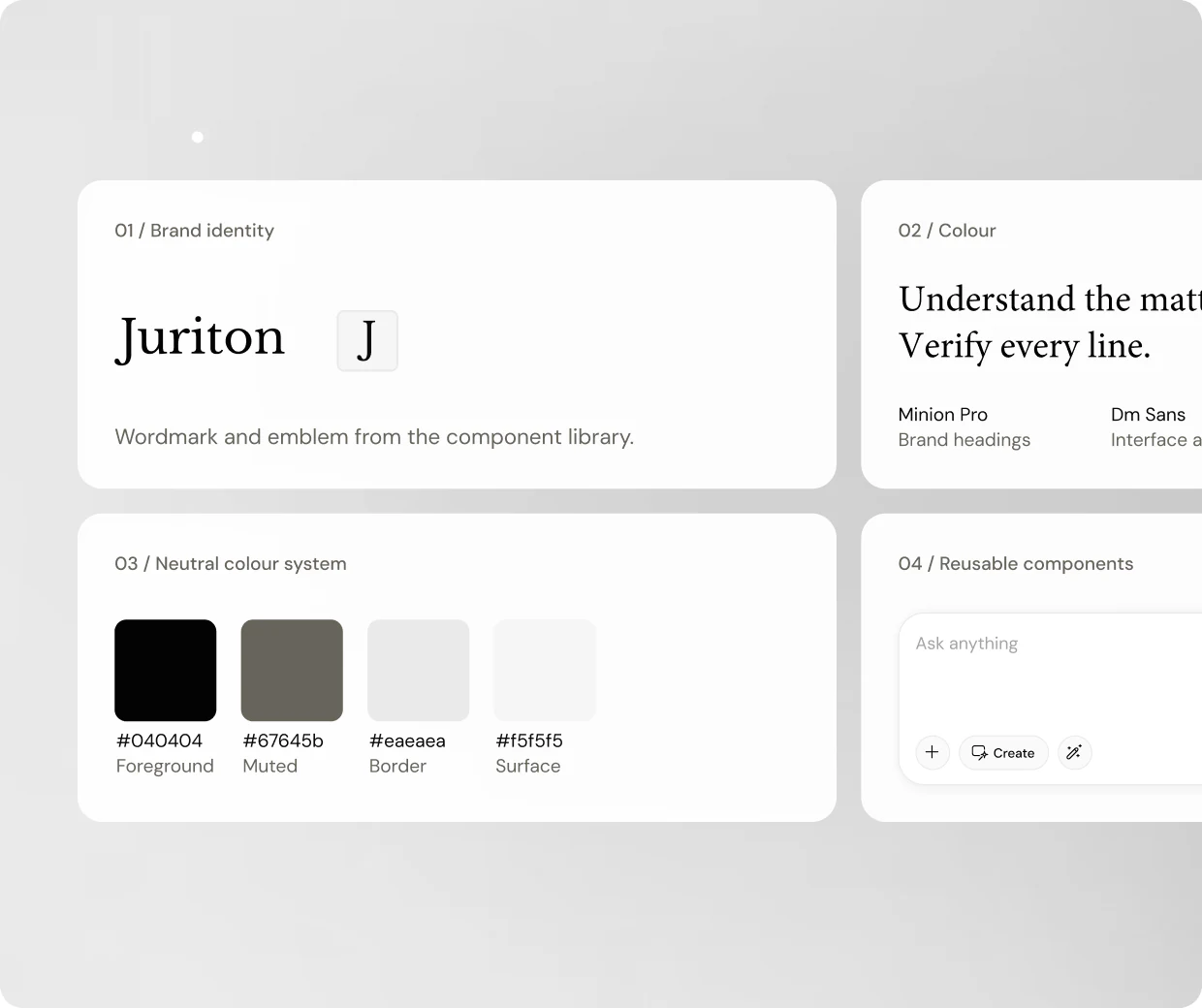
Build the foundations
I created Juriton’s brand identity for small and mid-sized law firms and a design system in Figma and frontend code. Reusable foundations helped our small team release features faster.


04
Bring it to market
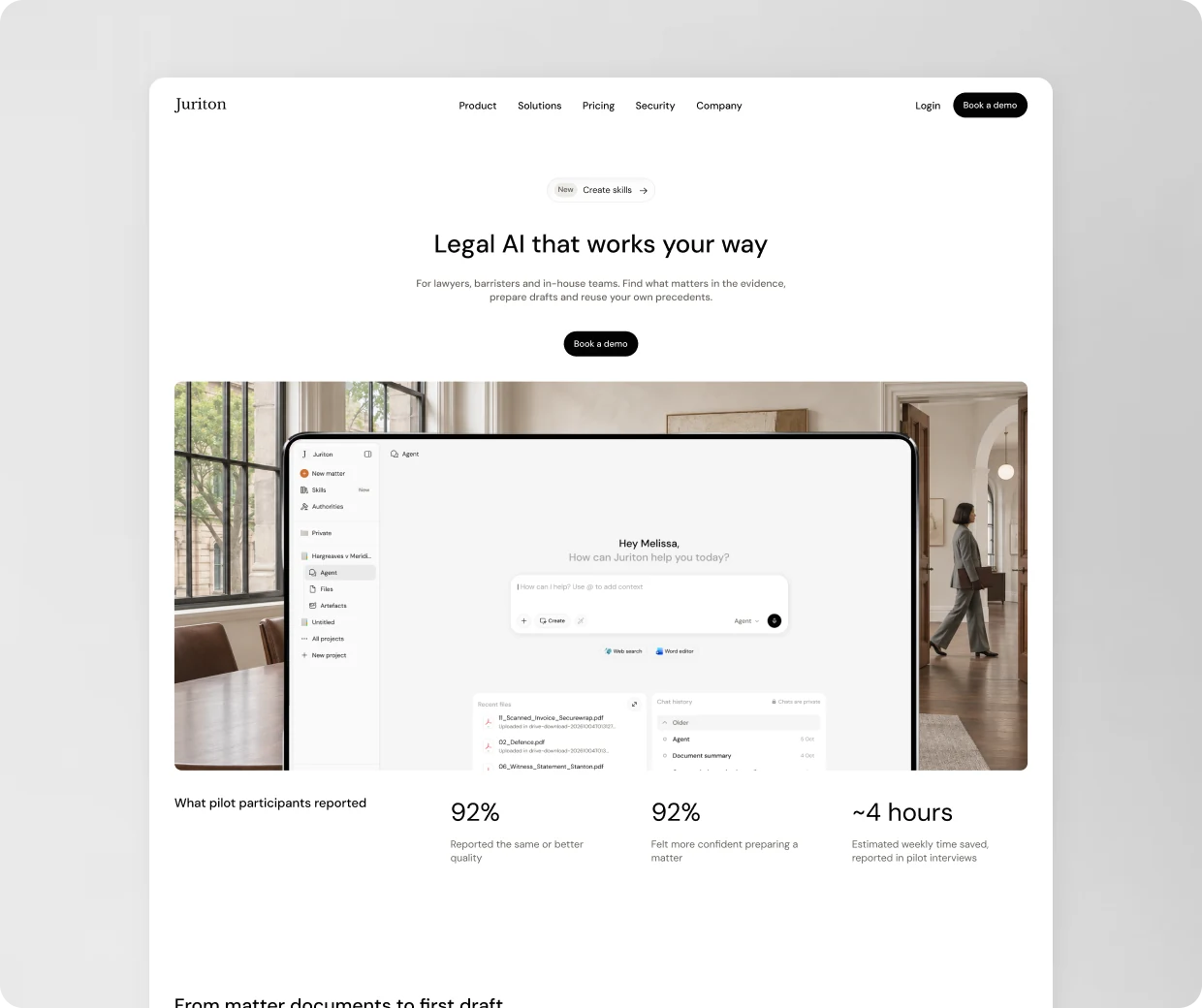
I designed and built the marketing website around giving lawyers more time for what matters to them. The content shows how Juriton can fit different areas of practice and the work people do each day. The new website goes live on 1 December 2026.


Solution
I translated the interviews into three decisions: skills for individual drafting methods, connected imports to reduce manual work, and a familiar editor with citations for fact-checking.
Together, these let lawyers work through a matter in their own way, with the source material close at hand.

01
Prepare drafts with the agent
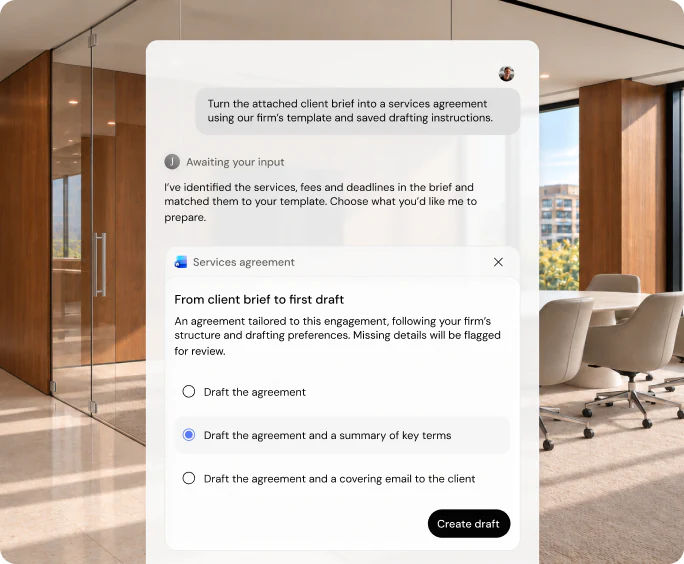
Lawyers can find facts, events and references across matter documents, then draft chronologies, contracts or interlocutory applications. I designed the agent flow to ask follow-up questions and let users choose what the output includes.Lawyers can find facts, events and references across their matter documents, then draft chronologies, contracts or interlocutory applications. If a request is unclear, the agent asks follow-up questions before drafting. I designed this flow so users could clarify the task and choose what the output should include.

02
Connect matter documents
Lawyers questioned re-uploading files already in their storage. I designed connected imports around Google Drive, OneDrive, Gmail and Outlook, so relevant documents and emails could be added to the right matter automatically.Lawyers questioned re-uploading files already in their storage. I designed connected imports around Google Drive, OneDrive, Gmail and Outlook, so relevant documents and emails could be added to the right matter automatically.
03
Reuse your way of working
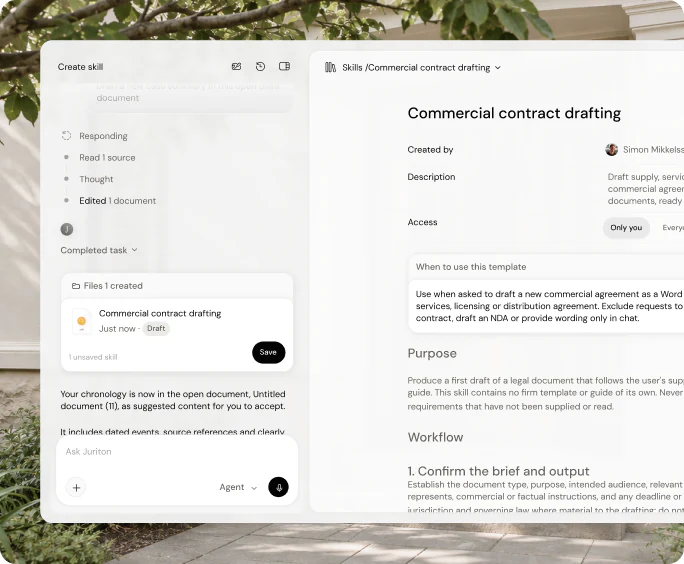
Interviews showed that each lawyer had their own drafting methods. I designed skills to save templates and instructions, reuse them across matters, and share them within a firm or publicly. This lets lawyers keep control of the structure.Interviews showed that each lawyer had their own drafting methods. I designed skills to save templates and instructions, reuse them across matters, and share them within a firm or publicly. This lets lawyers keep control of the structure.
04
Review and refine drafts
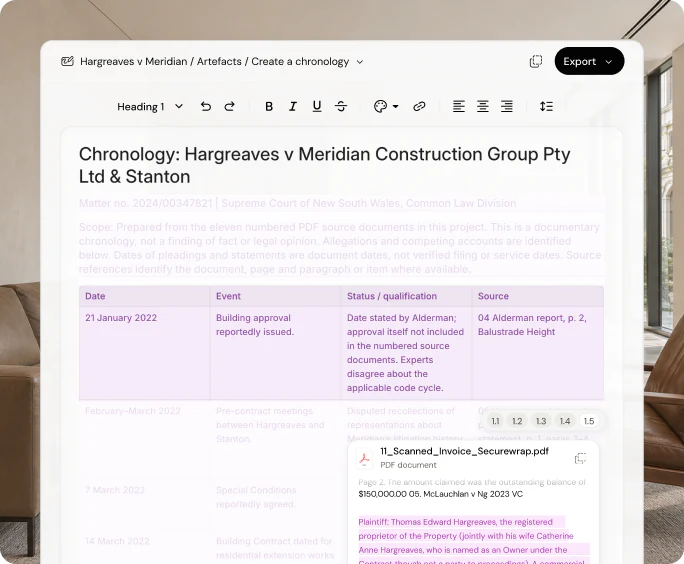
Lawyers wanted familiar drafting tools and a way to verify the work. I designed a Word-style editor where they could edit directly or ask the agent to revise a draft. Citations lead back to the original documents for fact-checking.Lawyers wanted familiar drafting tools and a way to verify the work. I designed a Word-style editor where they could edit directly or ask the agent to revise a draft. Citations lead back to the original documents for fact-checking.


Closing thoughts

Simon MikkelssonSenior Product Designer
The eight-week redesign gave lawyers more freedom to work in their own way. Looking back, I would have spent more time understanding those differences before basing our first version on a competitor.
The figures below come from 25 pilot participants’ feedback on the quality of their work, their confidence and the time they saved.
- Reported the same or better quality of work
- 92%
- Felt more confident in their preparation
- 92%
- Average time saved, as reported by pilot users
- 4 h/week
Got a complex problem? Let’s work through it together.
Whether it’s a role or a project, I’d like to hear what you’re working on and see whether we’re a good fit.